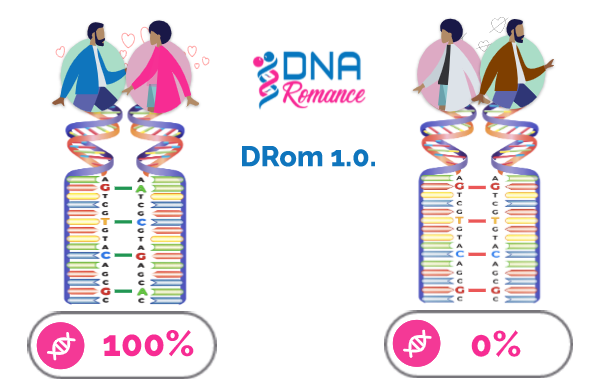
DNA Romance predicts "Chemistry" online using the DRom 1.0 algorithm. This algorithm assesses 100 specific markers within your DNA, focusing on genes proven to be involved in attraction and reproduction. Studies have shown that people with varied DNA markers in the Major Histocompatibility Complex (MHC) tend to find each other’s scent appealing and often enjoy more durable romantic relationships .
DNA 로맨스는 또한 예측합니다. 성격 호환성 심리학적 검사로부터 유래된 성격 유형을 사용하여 사용자가 평가할 수 있는 기능을 제공합니다. 필터를 사용하여 공통 관심사를 공유하고, 그리고 신체적 매력 그들의 경기 사진을 기반으로. DNA 로맨스 second genetic algorithm DRom 2.0 표현형을 예측하기 위해 관련 DNA 마커로 훈련된 AI 모델 사용높은 정확도로 특성. DRom 2.0은 DNA Romance를 보완합니다 프로필 확인 메커니즘, 사용자를 더 잘 나타내는 데 도움이 되는 여러 계층의 검사를 제공합니다.프로필 진정성.
우리를 탐험하세요
성격 유형 일치도 등급
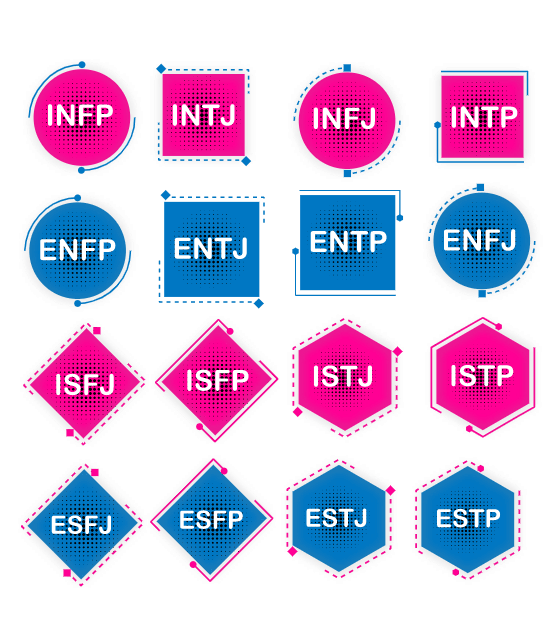
inspired by the renowned Jung/Myers-Briggs 16 personality types. Developed over a century ago by Swiss psychiatrist Dr. Carl Jung and further refined by Isabel Briggs Myers and Katherine Briggs, this psychometric test has stood the test of time. Recognized as the Myers-Briggs Type Indicator®, it's widely used in organizational psychology.
DNA Romance utilizes this personality compatibility algorithm to predict potential connections between both singles and couples. DNA Romance's algorithms strategically assigns higher compatibility scores to similar personality types, and lower scores to those that may conflict.
DNA Romance predicts "Chemistry" using DRom 1.0, an algorithm that analyses Single Nucleotide Polymorphisms (SNPs)confirmed to influence relationship choice in several independent studies. Here we present just a few of the research papers we evaluated in order to develop DRom 1.0 .
Dandine-Roulland C, Laurent R, Dall'Ara I, Toupance B 및 Chaix R (2019) 인간의 MHC 분해 교배에 대한 게놈 증거
이 연구는 주요 조직 적합성 복합체(MHC)와 인간의 짝 선택에 대해 다루고 있으며, 북유럽의 커플들이 MHC 비유사성을 보이는 경향이 있음을 제안합니다. 이는 짝 선택에 대한 생물학적 영향을 나타낼 수 있지만, 이스라엘과 같은 다른 지역에서는 사회적 및/또는 문화적 요인이 이러한 생물학적으로 주도된 짝 선택 선호를
Birnbaum GE, Zholtack K, Mizrahi M & Ein-Dor T (2019) The Bitter Pill: 경구 피임제의 중단은 의 매력을 향상시킵니다.대체 동료 Evolutionary Psychological Science volume 5, pages 276–285
*** 호르몬 약물은 여성들의 애인 선호도를 더 보살펴는 남자로 변화시키지만, 이를 중단하면 이러한 선호도가 복구되어 상대방과 유전적으로 일치하는 남자에 대한 흥미가 강해집니다, 특히 고가율 기간에는 더욱 그렇습니다. 이는 다른 애인을 찾아나가는 동기를 주기도 합니다.
Wedekind C (2019) A predicted interaction between odour pleasantness and intensity provides evidence for major histocompatibility complex social signalling in women . Proc. R. Soc. B 285:20172714.
*** 논문은 인간의 냄새 선호도와 주요 염색체 교배성(MHC) 간의 관계를 논하고, 이전 연구 결과를 논쟁하고, 겨드랑이 면도와 기타 요인들이 몸냄새의 인식과 MHC와의 연관성에 어떻게 영향을 미치는지를 분석하였으며, 과거 데이터의 재분석으로 냄새의 즐거움과 강도가 MHC 비유사성과 함께 사회적 신호를 통한 통신에 영향을 미치는 복잡한 관계가 있다는 것을 밝혔다.
Wu K, Chen C, Moyzis RK, Nuno M, Yu Z and Greenberger E (2018) More than skin deep: Major histocompatibility complex (MHC)-based attraction among Asian American speed-daters Evolution and Human Behavior. 39(4):447-456.
*** 속도 데이팅 컨텍스트에서, 여성들은 남성들과 달리 대형 인체 공유 인식 (MHC) 상호 완충성을 SNP 분석을 통해 선호하였으며, 다른 SNP들은 큰 HLA 유전자에 가까운 거리에 따라 끌림 방향에 따라 유형이 달라졌으며, MHC 기반 지수는 두 성별 모두에 대해 두 번째 데이트 제안을 예측하는 데 자기 신고된 성격 특성과 비슷한 영향력을 가지고 있었다.
Henningsson S, Hovey D, Vass K, Walum H, Sandnabba K, Santtila P, Jern P, Westberg L (2017) A missense polymorphism in the putative pheromone receptor gene VN1R1 is associated with sociosexual behavior . Transl Psychiatry. 7(4):e1102.
*** 이 연구는 인간 보메로나살 유형-1 리시버 1과 관련된 VN1R1 유전자의 다형성과 여성들의 사회성 성적 행동간에 유의한 연관성을 발견하였으며, 특히 한밤중이에 관련된 것으로 나타났습니다. 이것은 화학 신호가 인간 사회적 상호작용을 조절하는데 기여할 수 있음을 시사합니다.
Burger D, Meuwly C, Marti E, Sieme H, Oberthür M, Janda J, Meinecke-Tillmann S 및 Wedekind C.(2017) 디스트러스 암말(Equus caballus)에서 MHC와 관련된 선호도.
This study investigated the influence of the Major Histocompatibility Complex (MHC) genes and testosterone levels on female horse mating preferences, finding that mares demonstrated elevated interest towards MHC-dissimilar stallions during their diestrous phase (non-reproductive period), but other non-MHC linked male characteristics, possibly like physical attributes or behavioral cues, could override MHC influences during their estrous (reproductive) phase, with the context and cycle phase being pivotal in mate choice.
Sherlock JM, Sidari MJ, Harris EA, Barlow FK, Zietsch BP (2016) Testing the mate-choice hypothesis of the female orgasm: disentangling traits and behaviours . Socioaffect Neurosci Psychol. 6:31562.
*** 연구는 여성들이 다른 파트너들과 함께 다른 오르가스미 주기를 경험한다는 것을 제시하고, 이러한 파트너들은 더 많은 오르가스미를 일으키는 것으로 여성들에게 유머러스하고 창의적이며 따뜻하고 충실하고 더 좋은 냄새를 내는 것으로 평가되고, 또한 파트너의 성적 만족에 더 주의를 기울이는 것으로 나타났습니다. 이것은 여성 오르가스미가 고품질의 파트너를 선택하는 잠재적인 메커니즘으로 여겨지는 여성 오르가스미 선택 이론을 부분적으로 지지하는 것입니다.
Kromer J, Hummel T, Pietrowski D, Giani AS, Sauter J, Ehninger G, Schmidt AH, Croy I (2016) Influence of HLA on human partnership and sexual satisfaction . Sci Rep. 6:32550.
*** 연구결과, 인간에서는 HLA (면역계의 유전적 요소)의 불일치가 상대방 선택과 성적 만족도에 영향을 미칠 수 있으며, 다른 동물들에서 보이는 것과 비슷하게 유전적 일치성에 관련된 후각 신호를 감지하는 것을 통해 자식들에게 감염병에 대한 유연성과 유전적 다양성을 촉진할 수 있다.
Wlodarski R. and Dunbar RIM. (2015) What’s in a Kiss? The Effect of Romantic Kissing on Mate Desirability . Evol Psychol. ; 12(1): 178–199.
*** 이 연구는 연애적 키스하는 능력이 잠재적 애인의 평가에 영향을 미치는 것을 발견했다. 특히 일반적인 성적 관계 상황에서는 여성의 적합성이 향상되었으며, 일부 애정 상황에서는 시각적 신호가 키스 관련 정보의 영향을 무시할 수 있지만, 매력적인 시각적 정보의 영향은 남성보다 여성에게 더 강력한 것으로 나타났으며, 이는 키스가 다른 신호와 함께 애인의 품질과 적합성을 전달하는 다양한 역할을 한다는 것을 암시한다.
Burger D, Dolivo G, Marti E, Sieme H 및 Wedekind C.(2015) 암컷의 주요 염색체 유형이 말(Equus caballus)의 테스토스테론 농도와 정자 수에 미치는 영향
이 연구는 대표적인 인체 면역계 (MHC)가 말의 남성적 생식 전략에 미치는 영향을 조사합니다. 연구 결과, 말이 MHC 유형이 다른 암컷과 노출되었을 때 호르몬 수치가 높아지고 한 번의 이탈리스로 더 많은 젖소를 생산하는 것으로 나타났습니다. 이는 MHC 관련 신호가 호르몬 생산과 젖소 특성에 영향을 미치므로 생식 전략에 영향을 미친다는 것을 보여줍니다.
Christakis NA and Fowler JH (2014) 우정과 자연선택 PNAS. 11:10796–10801.
*** 이 연구는 사람들이 전 유전자에 걸쳐 일곱 번째 사촌과 같은 수준의 유사한 유전자형과 친구관계를 형성하는 것을 보여줍니다. 그리고 특정 유전자 집합이 친구관계 형성에 관여하며, 이는 청각과 면역 체계에 관련된 것으로 보입니다. 이것은 친구들이 "기능적 가족"이 될 수 있다는 것을 제시하고, 유사한 유전자형이 시너지적인 체력 이득을 제공할 수 있다는 것을 제시하여, 최근의 인간 진화에 영향을 미치고 있을 수 있다는 것을 제시합니다.
Laurent R and Chaix R (2012) MHC-dependent mate choice in humans: Why genomic patterns from the HapMap European American dataset support the hypothesis BioEssays. 34(4):267-71.
*** .
Lie HC, Simmons LH and Rhodes G (2010) Genetic dissimilarity, genetic diversity, and mate preferences in humans . Evolution and Human Behavior 31:8–58.
*** This study explores the influence of genetic factors, particularly the major histocompatibility complex (MHC), on mate preferences in humans, discovering that males tend to prefer MHC-dissimilar females in both short-term and long-term mating contexts, while genetic diversity impacts both male and female partner preferences across different mating contexts, thus supporting a significant role for the MHC in human mate selection and suggesting that these preferences might function to enhance genetic diversity in offspring.
Lie HC, Rhodes G and Simmons LH (2010) Is genetic diversity associated with mating success in humans ? Animal Behaviour. 79, 4:903-909
*** This study indicates that in humans, particularly females, genetic diversity, especially within the major histocompatibility complex (MHC), is associated with greater mating success, measured by the number of sexual partners, supporting the concept that genetic factors, potentially related to immune system functioning, play a role in human mating success, while no significant association was found in males.
Chaix R, Cao C, and Donnelly P (2008) Is Mate Choice in Humans MHC-Dependent ? PLOS Genetics, 4 (9)
*** The study indicates that while European American populations may prefer MHC-dissimilar mates, selecting for diversity in offspring's immune systems, such a pattern is not found in the examined African population, suggesting MHC's influence on mate choice can be context-dependent and potentially shaped by various factors.
Schwensow N, Fietz J, Dausmann K, Sommer S (2008) MHC-associated mating strategies and the importance of overall genetic diversity in an obligate pair-living primate . Evol Ecol. (22) 617-636
*** The study explores mate choice in the fat-tailed dwarf lemur, finding females prefer males with greater MHC-genetic diversity and lower MHC overlap as both social and genetic fathers, while overall genetic heterozygosity and relatedness do not significantly influence mate selection; extra-pair matings might occur to mitigate genetic incompatibility, highlighting a complex interplay of "good-genes-as-heterozygosity" and "disassortative mating" hypotheses in primate mating strategies.
Wedekind C (2007) The Major Histocompatibility Complex and Perfumers’ Descriptions of Human Body Odors Evolutionary Psychology.5(2): 330-343
*** This experiment reveals a connection between the Major Histocompatibility Complex (MHC) and the verbal descriptions of human body odors, demonstrating that professional perfumers can, to some extent, articulate MHC-correlated body odor components, underscoring the MHC's influence on human olfactory perception and possibly, mate selection, given the MHC's critical role in immune system functioning and previously noted impact on body odor and mate choice.
Garver-Apgar CE, Gangestad SW, Thornill R, Miller RD and Olp JJ (2006) Major histocompatibility complex alleles, sexual responsivity, and unfaithfulness in romantic couples Psychol Sci, 17(10): 830-835.
*** In the context of romantic couples, the study finds that as the proportion of shared Major Histocompatibility Complex (MHC) alleles increases, women’s sexual responsivity to their partners decreases, while their number of extra-pair sexual partners and attraction to men other than their primary partners, especially during their fertile phase, increases, suggesting that MHC-dissimilarity might play a role in sexual attraction and partner selection, potentially driven by underlying genetic and reproductive strategies to enhance offspring immunocompetence by maintaining genetic diversity.
Roberts CE, Gosling LM, Carter V and Petrie M (2006) MHC-correlated odour preferences in humans and the use of oral contraceptives Proc. R. Soc. B 275, 2715–2722
*** This study investigates how oral contraceptives influence women's preferences for certain male odours, which are known to be influenced by genes in the Major Histocompatibility Complex (MHC). Previous research has indicated that female preference for MHC-dissimilar male odour may function to increase offspring heterozygosity or minimize inbreeding. Interestingly, it has also been suggested that women using oral contraceptives tend to prefer the scent of MHC-similar males, which runs contrary to this logic. The study utilized a longitudinal design to test women before and after initiating contraceptive pill use, comparing their preferences to a control group of non-pill users. While the study didn’t find a significant difference in ratings between odours of MHC-dissimilar and MHC-similar men during the follicular cycle phase in general, it did unearth that single women tended to prefer the odour of MHC-similar men, whereas women in relationships leaned towards the odour of MHC-dissimilar men. This latter finding aligns.
Wedekind C (2006) The Intensity of Human Body Odors and the MHC: Should We Expect A Link ? Evolutionary Psychology. 4:85-94
*** This research discerns relationships between a few MHC (Major Histocompatibility Complex) genes and the intensity and pleasantness of men's body odors, discovering that men with at least one homozygous MHC antigen don't emit notably more intense odors than heterozygotes, yet their scents are perceived as significantly stronger by women with dissimilar MHC.
Pause BM, Krauel K, Schrader C, Sojka B, Westphal E, Mu¨ller-Ruchholtz W, and Ferstl R. (2006) The human brain is a detector of chemosensorily transmitted HLA-class I-similarity in same- and opposite-sex relations Proc. R. Soc. B (2006) 273, 471–478 doi:10.1098/rspb.2005.3342
*** This study reveals that humans subconsciously detect and respond to body odors from individuals with similar HLA (Human Leucocyte Antigen) genetic markers, which might play a critical role in social interactions and mate selection by acting as subtle social signals within both same-sex and opposite-sex relationships..
Martins Y, Preti G, Crabtree CR, Runyan T, Vainius AA and Wysocki CJ (2005) Preference for Human Body Odors Is Influenced by Gender and Sexual Orientation . Psychological Science, 16(9) 694-702
*** This study demonstrates that sexual orientation and gender influence individuals' preferences for human body odors, with heterosexual and homosexual males and females showcasing distinct two-choice preferences when presented with body odors from individuals of different gender and sexual orientation combinations, implying that body odor can be a factor in sexual and social partner selection.
Horton R, Wilming L, Rand V, Lovering RC, Bruford EA, Khodiyar VK, Lush MJ, Povey S, Talbot CC Jr, Wright MW, Wain HM, Trowsdale J, Ziegler A, Beck S (2004) Gene map of the extended human MHC. Nat Rev Genet 5(12):889-899
*** This study characterises an integrated gene map of the extended human MHC, a pivotal region in the vertebrate genome for infection and autoimmunity due to its essential role in both adaptive and innate immunity, highlighting its significant content related to paralogy, polymorphism, immune functionality, and its association with various diseases, providing a comprehensive view stemming from the assimilation of data from several large-scale studies..
Jacob S, McClitock MK, Zelano B and Ober C (2002) Paternally inherited HLA alleles are associated with woman’s choice of male odour . Nature Genetics, 30:175
*** This study demonstrates that women can discern differences in male body odor influenced by a single variance in HLA (human MHC) allele, with a woman's capacity to distinguish and prefer certain odors notably being based on HLA alleles inherited from her father and not her mother; this suggests that paternally inherited HLA-associated odors influence odor preference and might function as social cues, even despite a milieu of potential odors derived from a variety of genetic and cultural factors..
Milinski M and Wedekind C (2001) Evidence for MHC-correlated perfume preference in humans . Behavioural Ecology 12(2):140-149
*** The study explores the relationship between Major Histocompatibility Complex (MHC) genotypes and perfume preferences in humans. They discovered a notable correlation between an individual's MHC (specifically HLA-A, -B, -DR) and their ratings of various scents for personal use, with certain HLA types (e.g., HLA-A2) showing consistent scent preferences. However, when it came to preferences for a partner's scent, the correlation was largely insignificant, aligning with the hypothesis that individuals select perfumes for personal use to possibly enhance or amplify their own immunogenetic revealing body odors, rather than to alter the perceived scents of their partners.
Wedekind C, Seebeck T, Bettens F And Paepke AJ (1995) MHC-dependent mate preferences in humans. Proc.R.Soc.Lond.B. 260:245-249.
*** This study found that people tend to prefer the body odors of potential mates who have different immune system genes than their own, but this preference changes for women on birth control.
MHC similarity between couples is known to cause issues with family planning, here are some of the peer-reviewed papers describing the role of MHC similarity and human reproduction .
* found that sperm viability was associated with partners' HLA dissimilarity, indicating that cervical mucus may selectively facilitate later gamete fusion between immunogenetically compatible partners .
Jokiniemi A, Magris M, Ritari J, Kuusipalo L, Lundgren T, Partanen J and Kekäläinen J (2020) Post-copulatory genetic matchmaking: HLA-dependent effects of cervical mucus on human sperm function Proc Biol Sci., doi: 10.1098/rspb.2020.1682. Epub 2020 Aug 19.
* found an increased frequency of homozygosity for HLA-E*0101 in Egyptian women with RM
Mosaad YM, Abdel-Dayem Y, El-Deek BS and El-Sherbini SM (2011) Association between HLA-E *0101 homozygosity and recurrent miscarriage in Egyptian women . Scand J Immunol. 2011 Aug;74(2):205-9. doi: 10.1111/j.1365-3083.2011.02559.x.
* proposed a genetic-risk calculation that could predict recurrent miscarriage (RM) based on analysing HLA haplotypes from couples either with histories of successful pregnancies or RM .
Mora-Sánchez A, Aguilar-Salvador D, Nowak I (2019) Towards a gamete matching platform: using immunogenetics and artificial intelligence to predict recurrent miscarriage NPJ Digit Med Mar 7;2:12. doi: 10.1038/s41746-019-0089-x
* performed a meta-analyses of 41 studies and showed that HLA-B sharing and HLA-DR sharing were both associated with the occurrence of RM .
Meuleman T, Lashley LE, Dekkers OM, van Lith J, Claas FH and Bloemenkamp KW (2015) HLA associations and HLA sharing in recurrent miscarriage: A systematic review and meta-analysis Hum Immunol. May;76(5):362-73. doi: 10.1016/j.humimm.2015.02.004.
* identified differential association of alleles in HLA-A, HLA-B, HLA-C, and HLA-DRB1 when compared with reported world RSA patients .
Shankarkumar U, Pawar A, Gaonkar P, Parasannavar D, Salvi V, and Ghosh K (2008) HLA allele associations in idiopathic recurrent spontaneous abortion patients from India J Hum Reprod Sci. 2008 Jan;1(1):19-24. doi: 10.4103/0974-1208.39592.
* describe the relationship between HLA similarity at individual alleles, as well as HLA haplotypes as indicators for increased risk of fetal loss among Hutterite couples .
Ober C (1999) Studies of HLA, fertility and mate choice in a human isolate . Hum Reprod Update 5(2):103-107.
* results of a 10 year study that demonstrated increased fetal loss rates among Hutterite couples matching for HLA antigens .
Ober C, Hyslop T, Elias S, Weitkamp LR, Hauck WW (1998) Human leukocyte antigen matching and fetal loss: results of a 10 year prospective study Human Reproduction, Volume 13, Issue 1, Jan 1998, Pages 33–38
* demonstrated increased rates of recurrent spontaneous abortion among Hutterite couples matching for HLA-DQA1 alleles
Ober., Steck., Ven., Billstrand., Messer., Kwak., Beaman., Beer (1993) MHC class II compatibility in aborted fetuses and term infants of couples with recurrent spontaneous abortion Journal of Reproductive Immunology, Volume 25, Issue 3, December 1993, Pages 195-207
Our personality compatibility rating is based on the Myers-Briggs 16 personality types. This test has a long history with the development of the first 3 components dating back almost 100 years to Dr. Carl Jung and today the 4 letters and 16 personality type groups are widely known to the majority of people. DNA Romance's personality compatibility algorithm, called PC1, puts maximum weight on similar personality types and less weight towards personality types that tend to clash.
Lok C (2012) Career development: What's your type ? Nature, 488: 545-547
* The article highlights the utilization of the Myers-Briggs Type Indicator and similar personality tests in assisting scientists to enhance their soft skills and navigate their careers by providing insights into their personality traits, which can inform their communication, leadership, and teamwork strategies within professional environments.
Keirsey, D (2006) Please Understand Me II (3rd ed) . Promethius Nemesis Book Co., Del Mar, CA.
Please Understand Me는 David Keirsey과 Marilyn Bates가 제시한 자기 평가 설문지인 Keirsey Temperament Sorter를 사용해 16가지 성격 유형과 4가지 더 넓은 성격 유형(예술가, 감시자, 합리주의자, 이상주의자)으로 분류하는 심리학 책입니다. 이 책은 읽어보는 사람들에게 그들의 행동 패턴과 기본적인 값에 대한 통찰력을 제공하며, 이전의 심리학 이론과 유형 지표, 특히 Myers-Briggs Type Indicator를 간추려 사용합니다.
Myers IB, McCaulley MH, Quenk NL and Hammer AL (1998) MBTI manual: A guide to the development and use of the Myers-Briggs Type Indicator . Consulting Psychologists Press, Palo Alto, CA, Vol. 3.
MBTI® 세 번째 판 매뉴얼은 이마스-브리그스 유형 지표® 도구의 개발, 적용 및 해석에 대한 종합적인 가이드로 작용합니다. 이 도구의 이론, 신뢰성 및 유효성에 대한 자세한 정보를 제공하고, 이마스-브리그스 유형 지표가 식별하는 16 가지 성격 유형에 대한 통찰력을 제공하며, 심리학적 유형의 선두주자인 이자벨 브리그스 마이어스, 메리 H. McCaulley, 노에미 L. Quenk 및 앨런 L. 해머가 저술한 것입니다.
Myers IB, McCaulley MH and Most R (1985) Manual, a guide to the development and use of the Myers-Briggs type indicator. Consulting Psychologists Press.
The 1985 edition, 'Manual: A Guide to the Development and Use of the Myers-Briggs Type Indicator,' introduces and elucidates the Myers-Briggs Type Indicator (MBTI®), designed to render C. G. Jung's psychological type theory comprehensible and applicable in daily life, underlining the principle that behavioral variations, while seemingly sporadic, are consistently orderly, deriving from intrinsic differences in individuals’ preferred use of perception and judgment.
Myers IB (1962) Manual, a guide to the development and use of the Myers-Briggs type indicator. Consulting Psychologists Press .
1962년 마이어스-브리거스 유형 지표의 수록서는 C. 중의 심리학적 유형의 이론을 구현하기 위한 종합적인 통찰력과 가이드라인을 제공하며, 행동 차이는 기본적인 감각과 판단 선호도 때문에 체계적이고 일관되게 발생한다고 주장합니다. 이러한 선호도를 자기 보고서를 통해 식별하여 개인 심리학적 유형을 파악하고, 이를 통해 그들의 효과가 반응, 동기, 가치 및 능력에 미치는 영향을 실질적으로 응용하고 연구할 수 있도록 하는 것이 목표입니다.
Jung CG (1923) Psychological types: or the psychology of individuation Oxford, England: Harcourt, Brace .
1923년에 처음 출간된 카를 구스타프 융의 '심리학적 유형'은 유형 이론의 기초를 제시하고, 사람들의 개성에 있어 다양하고 무작위한 차이를 시스템적이고 체계적으로 설명하기 위한 프레임워크를 제공합니다. 이것은 감각과 판단의 인간의 인지 기능을 어떻게 사용하는지에 따라 기본적인 행동 차이가 발생한다는 가정을 제시하고, 많은 성격 이론과 평가를 이끌어 내는데 중요한 역할을 하였습니다. 그 중에서도 특히 마이어스-브리그 유형 지표(MBTI)가 주목받고 있습니다.