
Vísindin
Vísindin á bak við samskiptahæfni í samböndum.
DNA Romance estimates online "chemistry" signals using the DRom 1.0 algorithm. It assesses 100 specific markers within your DNA, focused on genes studied for possible roles in attraction and reproduction. Studies suggest that variation in Major Histocompatibility Complex (MHC) markers can relate to scent preference and relationship outcomes, but HLA is one signal rather than a guarantee.
Why DNA Matchmaking?
Biological Signals
Research links MHC variation with scent preferences and attraction, so DNA Romance treats immune-system diversity as one compatibility signal, not a guarantee.
Personality Context
The personality layer adds communication style, conflict patterns, and lifestyle preferences to the genetic signal so matches have more context before meeting.
Fewer Blind Spots
Instead of relying on photos alone, the flow compares DNA and personality signals early so members can focus attention on stronger-fit introductions.
DRom 1.0 - Interpreting Chemistry Signals

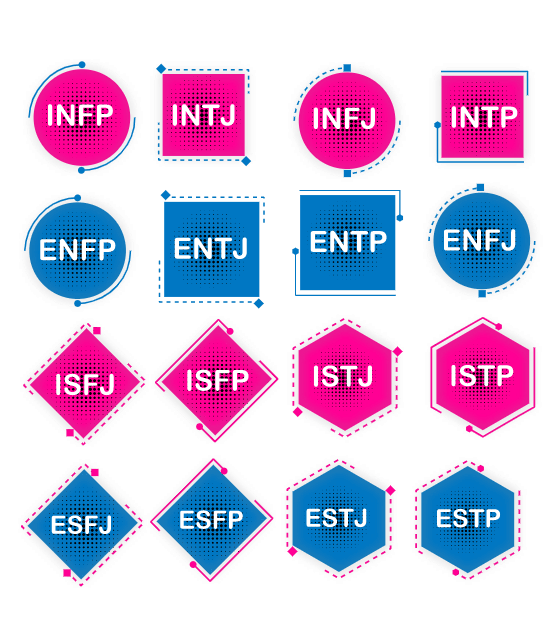
DNA Romance spáir einnig fyrir um. persónuleika samræmi using 16-personality types, lets users evaluate shared common interests via filters, and Líkamleg áhrif. based on photographs.
Our second algorithm, DRom 2.0, compares relevant DNA markers with profile context, adding another signal for authenticity and trait context without treating DNA as a standalone prediction.
Persónuleikahæfni einkunn.
Hvernig mismunandi persónuleikatýpur tengjast í samböndum
Our personality compatibility rating draws on the 16 persónuleikategundir a psychometric framework with over a century of development. Carl Jung's 1921 work was refined by Isabel Briggs Myers and Katherine Briggs into the 16-personality model, widely used today in organisational psychology.
DNA Romance applies this framework to add context for singles and couples, assigning higher compatibility scores to similar personality types and lower scores to types that tend to conflict.
Lykilrannsóknarrit
Selected peer-reviewed studies underpinning the science behind DNA Romance.

MHC-Based Attraction (Chemistry) and Relationship Choice
DNA Romance evaluates "chemistry" signals using DRom 1.0, an algorithm that analyses Single Nucleotide Polymorphisms (SNPs) reported in several independent relationship-choice studies. Here we present a few of the research papers we evaluated in order to develop DRom 1.0.
Dandine-Roulland o.fl., 2019
Birnbaum o.fl., 2019
Wedekind, 2019
Henningsson o.fl., 2017
Christakis & Fowler, 2014
Garver-Apgar o.fl., 2006
Roberts o.fl., 2006
Wedekind & Furi, 1997
Wu et al., 2018
Burger og aðrir, 2017.
Sherlock et al., 2016
Kromer et al., 2016
Wlodarski and Dunbar., 2015
Burger og aðrir, 2015.
Laurent and Chaix., 2012
Lie et al., 2010
Lie et al., 2010b
Chaix et al., 2008
Schwensow og samstarfsfólk, 2008.
Wedekind., 2007
Wedekind., 2006
Pause et al., 2006
Martins et al., 2005
Horton et al., 2004
Jacob et al., 2002
Milinski and Wedekind., 2001
Wedekind et al., 1995
How similarities or differences in MHC alleles can influence family planning
MHC similarity between couples has been studied in relation to family planning, here are some of the peer-reviewed papers describing MHC similarity and human reproduction.
Jokiniemi o.fl., 2020
Mosaad et al., 2011
Mora-Sánchez og samstarfsfólk, 2019.
Meuleman o.fl., 2015
Shankarkumar et al., 2008
Ober, 1999
Ober o.fl., 1998
Ober o.fl., 1993

Persónuleika tegundir.
Our personality compatibility rating is based on the 16 personality types. This framework has a long history with the development of the first 3 components dating back almost 100 years to Dr. Carl Jung and today the 4 letters and 16 personality type groups are widely known to the majority of people. DNA Romance's personality compatibility algorithm, called PC1, puts maximum weight on similar personality types and less weight towards personality types that tend to clash.
Lok., 2012
Keirsey., 2006
Moutafi et al., 2003
Myers et al., 1998
Myers et al., 1985
Myers., 1962
Jung., 1923
Ready to find your DNA-compatible match?
Create your profile, add DNA when you are ready, and start matching tonight.